
Capture GHG Protocol Scope 3 data the moment it happens — audit-ready, Bursa NSRF-aligned, delivered through activations your team already runs.
ESG stands for Environmental, Social, Governance — the three pillars used to judge whether a company actually walks its talk.
Environmental
Emissions, waste, resource use
Social
How you treat people
Governance
How you operate
The shift
For years, this lived in back-office reports. Not anymore. Bursa now requires listed companies to disclose the full carbon impact of their operations — brand activations included. Consumers fact-check green claims in real time. Auditors review what used to slide.
Why our clients care
The brands we work with — many Bursa-listed, all publicly visible — now answer to higher standards on what their brand events leave behind. Brand activations sit right at the centre of that scrutiny.
That's the world we've been quietly building for.
Here's what running an activation with the Digital ESG Passport actually looks like — from a guest's first scan to a brand's audit-ready export.
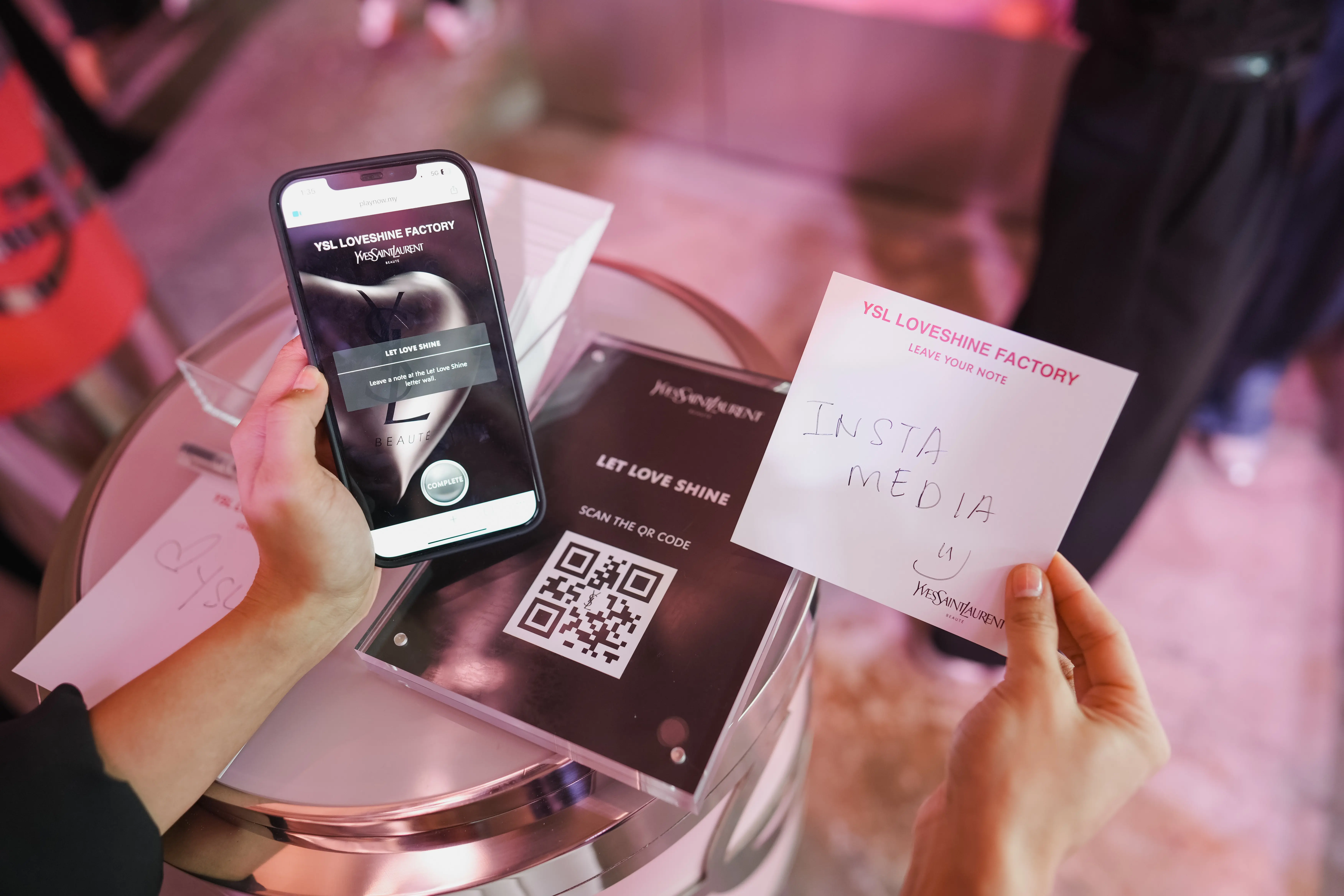
Scan in
Guest scans a QR at the entrance. A digital passport opens on their phone — no app, no signup.
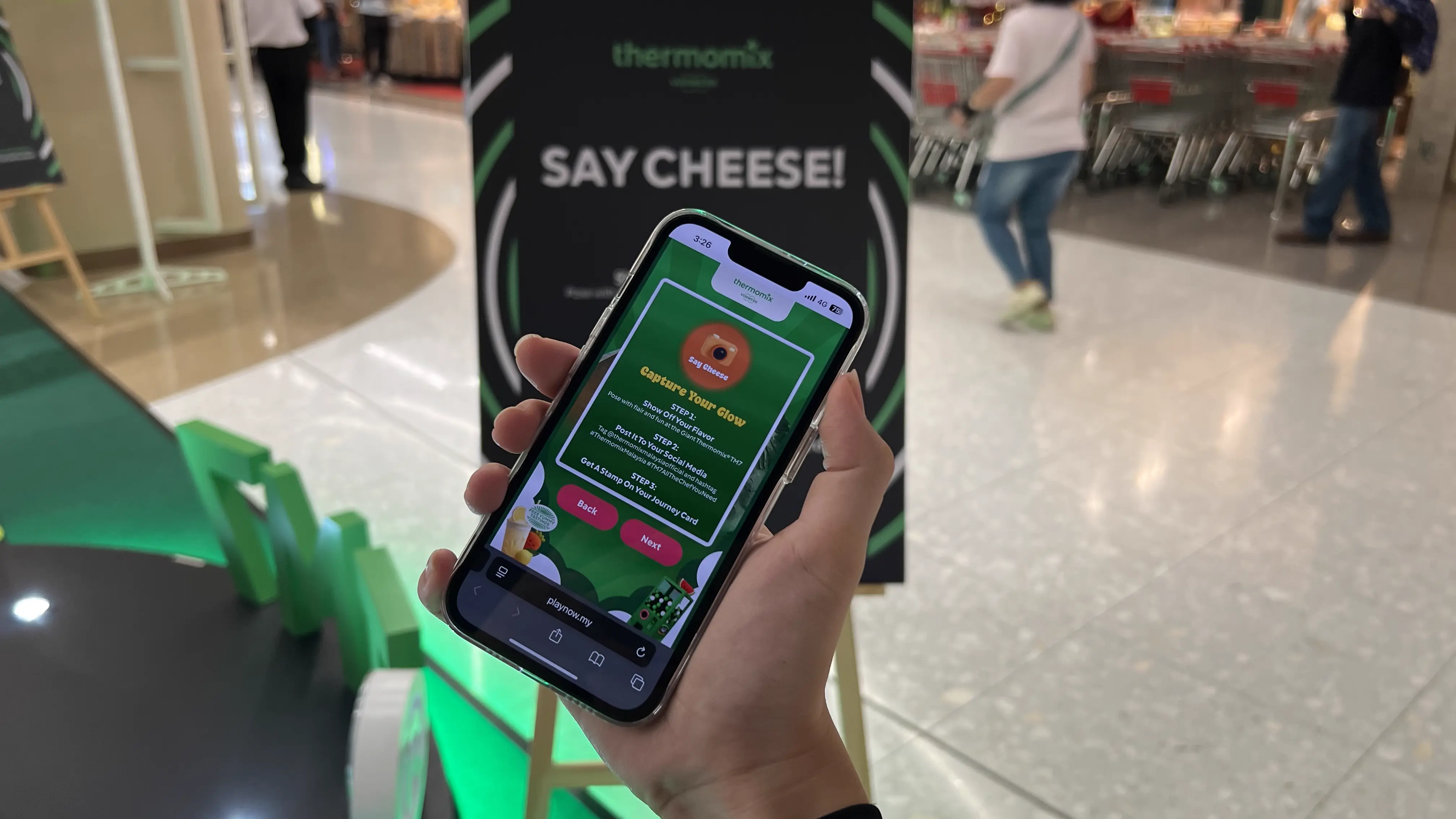
Move through
Every station tap, booth visit, and sample claim is auto-logged to their passport and your dashboard.
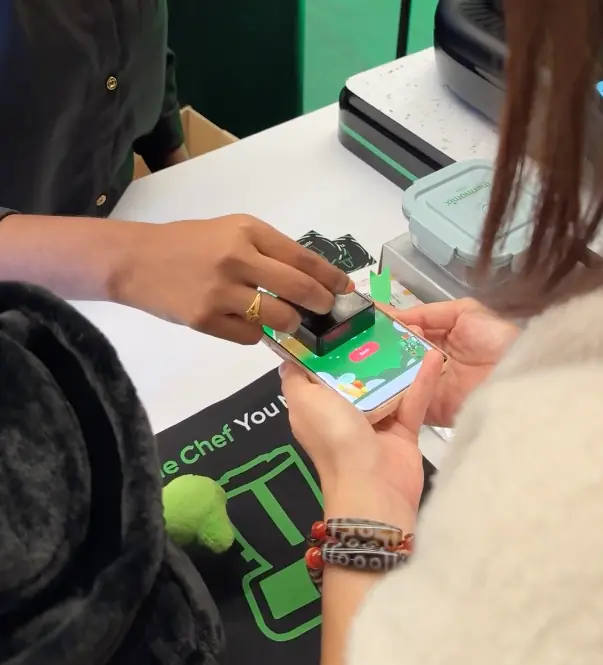
Earn eco-actions
Skip a plastic prize. Upcycle a material. Share digital not print. Each action gets stamped.
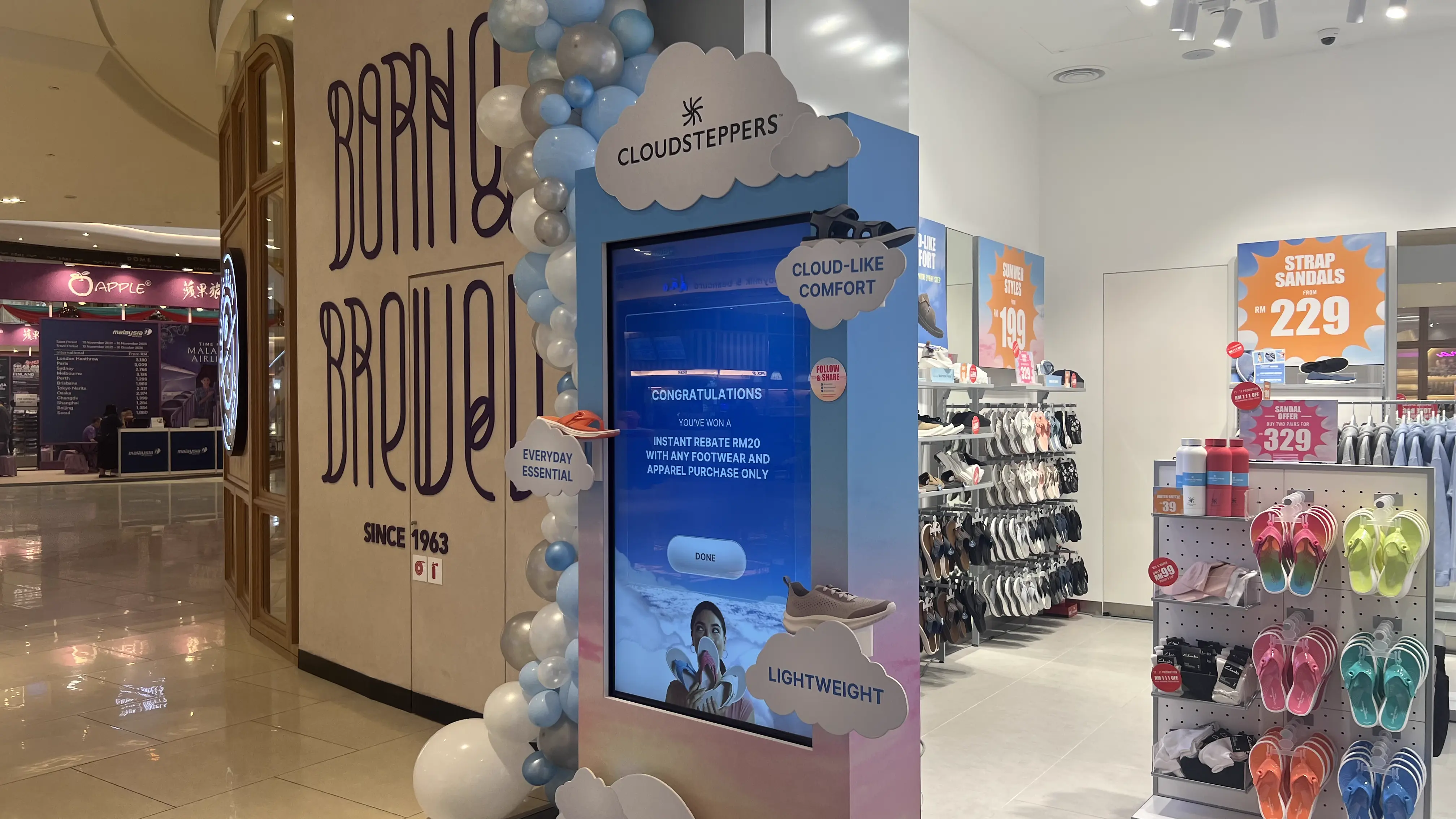
Get rewarded
Digital perks, vouchers, branded content — delivered to phone. No swag bag, no waste pile at teardown.
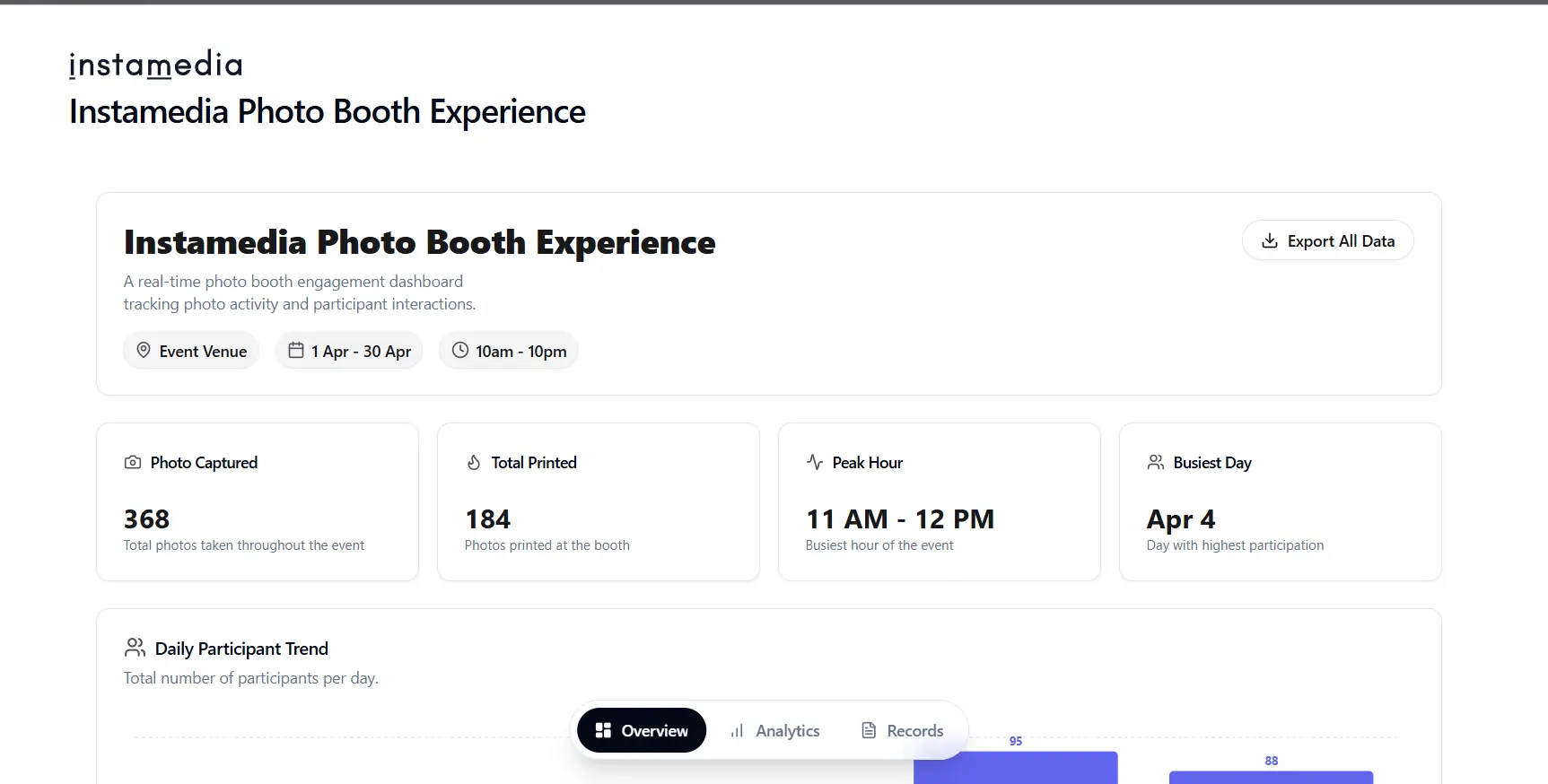
Brand gets data
Every interaction becomes a Scope 3 line item. Audit-ready exports in 7 ESG frameworks.
Same activations we've always built — redesigned to leave less behind. Mix, match, or run them all on the same passport.
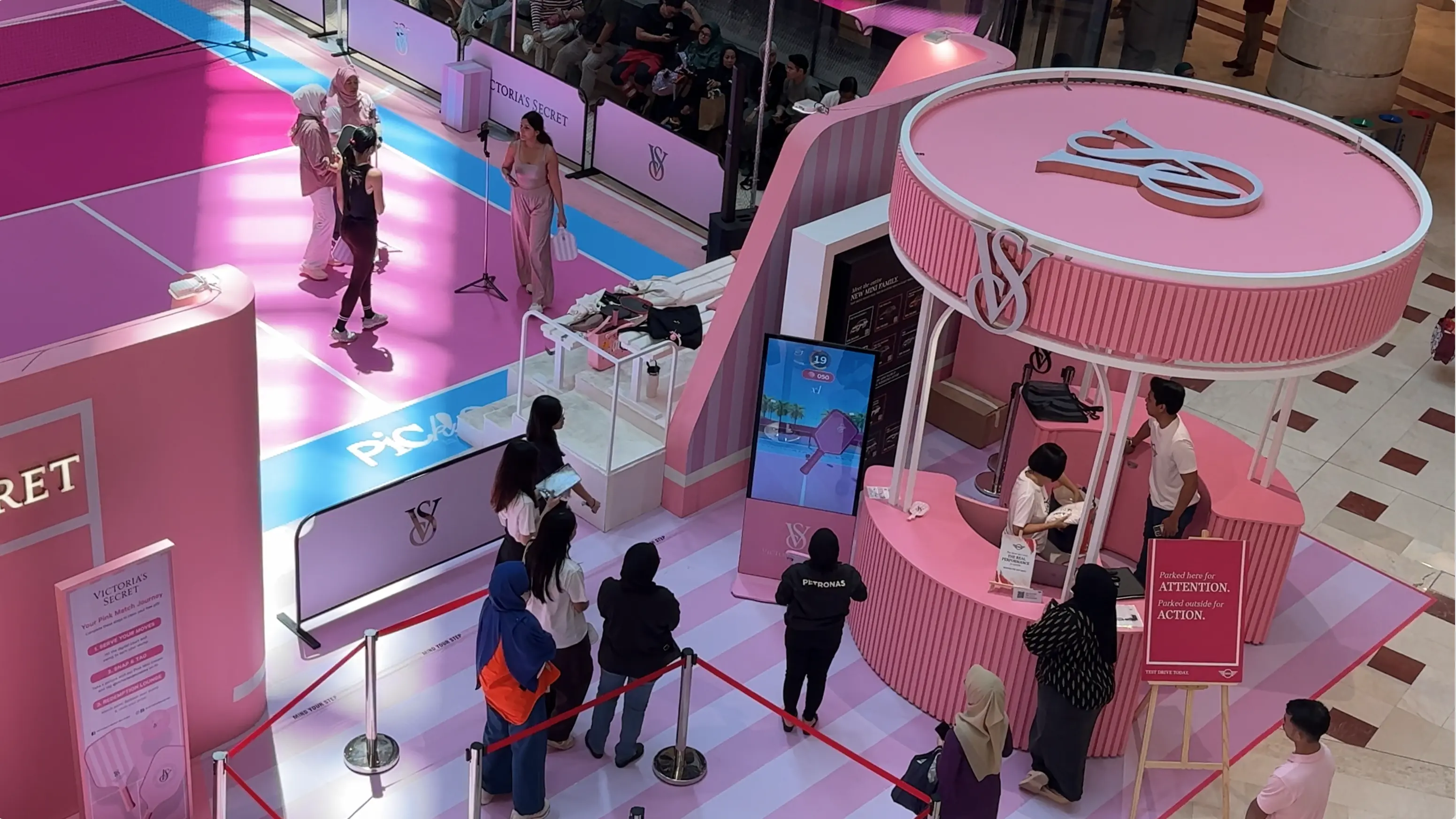
Print-free Photo Booths
IN:FRAME Green Edition
Same fun moment. Guests scan a QR code to download their photos straight to their phone — with a sustainability overlay. Zero prints. Zero shipping.
Digital Game Stations
Powered by IMX Engine
Same competition, same crowd-puller. Screen-based interactive play with digital rewards — no plastic prizes, no waste pile at teardown.
Upcycling Station
Bring-your-waste activation
Guests turn donated and recycled materials into custom takeaways. Hands-on engagement that doubles as material diversion — every prize earned, not handed out.
Interactive Workshop
Reusable kits + digital instruction
Skill-building sessions powered by reusable tools and on-screen instruction. Guests learn, create, and leave with a digital portfolio — not a plastic bag of swag.
Materiality Workshops
Scenario-based decision exercise
80 senior managers vote on materiality with structured logging. You walk out of the session with a defensible primary-data answer pre-formatted to ISSB IFRS S2 and GRI 3 — not a deck of stock photos.
ESG Townhall Activations
Instrumented all-hands
Same townhall format your team already shows up to. Now instrumented end-to-end: commute capture at the door, dwell tracking on the floor, sentiment capture at exit. Per-function Cat 7 breakdowns by default.
Got a custom vision in mind? We build bespoke activations too. Talk to us about it →
Under NSRF — Malaysia's National Sustainability Reporting Framework — Bursa-listed companies must now disclose Scope 3 emissions in their annual reports. That's the slice of your carbon footprint that lives outside your own walls.
Emissions you burn directly
Energy you purchase
Everything your supply chain emits
Activations live hereEvery booth printed, every sample shipped, every stage built — those count toward your number, even when someone else builds them. We capture Categories 5 (waste generated) and 11 (use of sold products) at line-item level.
"Estimated from spend" no longer survives an auditor's review. Without tracking at the activation itself, your spend sits in a disclosure gap most agencies aren't equipped to close.
Sample dashboard · Maybank ESG Week 2026 · Kuala Lumpur
0
Guests engaged
Passport activation
0 kg
Plastic diverted
Scope 3 cat 5
0
Climate actions taken
Scope 3 cat 11
0 tCO₂e
Emissions offset
BVCM retired
No black box. Each phase has a deliverable, a timeline, and a sign-off moment.
Brief
Which Scope 3 categories matter this cycle? Which events on your calendar are capture candidates? One 60-minute call.
Concept
Custom data schema mapped to Bursa, GRI, ISSB. Concept doc delivered in five working days.
Build
2–4 weeks for a variant. 4–8 weeks for fully bespoke. Built in our KL studio, no third-party dependencies.
Deploy
Event day. Crew on-site from set-up to teardown. Live dashboard throughout. Your sustainability officer has access from registration open.
Report
Audit-ready Scope 3 data within seven working days. PDF, JSON, CSV. Methodology notes for your auditor. Photo library for your sustainability report.
Indicative ranges, Malaysian Ringgit. Final quote scoped to your event, framework, and category coverage. Bryan signs off every quote.
1-day event, one Scope 3 category instrumented. Same-day report. Entry point for first-time Cat 5 or Cat 6 capture.
Full Scope 3 backend, live dashboard, audit-ready exports across all seven frameworks. Most common engagement.
Multiple events across the year, integrated with your ESG software stack. Continuous primary-data stream into your reporting cycle.
If your sustainability budget is below RM 12,000 per event, we're not the right fit. The capture engineering doesn't scale down meaningfully — there's a minimum threshold for the dashboard, schema validation, and crew. Talk to us anyway if you're building toward it.
The 22 questions sustainability officers, ESG leads, and procurement heads have actually asked us.
Scope 3 emissions reporting is the disclosure of all indirect greenhouse gas emissions produced in a company's upstream and downstream value chain — excluding direct emissions (Scope 1) and purchased electricity (Scope 2).
The GHG Protocol defines 15 Scope 3 categories. For most corporates, Scope 3 makes up 70–95% of total emissions.
In Malaysia, Scope 3 disclosure is increasingly required under the Bursa Sustainability Reporting Guide and the National Sustainability Reporting Framework (NSRF).
The GHG Protocol defines 15 Scope 3 categories. Instamedia captures the 5 highlighted below directly:
Scope 1 & 2 are invoice-driven and machine-readable. Scope 3 is human-driven and behaviourally messy.
The challenge by category:
Most corporates default to spend-based estimates because primary capture is too logistically expensive. Instamedia compresses that capture into a single corporate event.
For most Bursa-listed corporates: yes — your obligations are tightening and the timeline is short.
Malaysia's NSRF (administered by the Securities Commission) is rolling out phased adoption of ISSB IFRS S1 & S2:
ISSB S2 requires Scope 3 disclosure where material. Check sc.com.my/nsrf for current effective dates.
Scope 1 & 2 are usually small. Scope 3 is usually the dominant portion of a corporate footprint.
Corporate events concentrate Scope 3 activity in time and space:
Instrument the event. Capture the data. Export it audit-ready.
Five categories — the ones that produce primary activity data when humans walk into a corporate event:
The remaining ten categories require different capture methods and live in other parts of your reporting stack.
We don't compete — our exports drop into them.
ESG SaaS is the reporting destination. Instamedia is the primary-data source. Most corporates need both.
Yes. Our schema is built against the GHG Protocol Corporate Value Chain (Scope 3) Standard.
Each captured data point maps to a defined category and inherits the appropriate emission factor logic.
Output formats:
Yes. The Bursa Sustainability Reporting Guide disclosure fields are pre-mapped in our export.
Your sustainability team receives a dataset structured to drop directly into your reporting template. We don't write your sustainability report — we hand your team the primary-data exhibit that goes into it.
Yes. CSV and JSON exports are designed to ingest into:
We haven't built proprietary lock-in — the data is yours, in formats your existing stack already understands. Less common platforms? We confirm the ingestion path during the brief stage.
Live counters during the event:
Your sustainability officer can refresh from anywhere with internet access throughout the activation. The dashboard freezes at event close and is replaced by the final dataset within seven working days.
Yes. Audit-readiness means traceability, methodology documentation, and reproducibility.
Every captured data point carries:
Your auditor (SIRIM, SGS, Bureau Veritas, or another) can trace any reported number back to its capture moment.
Below RM 12,000 per event we're not the right fit — the capture engineering doesn't scale down meaningfully.
For corporates inside a reporting deadline: brief us 4–8 weeks ahead and we'll hit it.
Yes. Every front-end touchpoint is brandable — your logo, your colours, your tone of voice:
The data schema and methodology stay GHG Protocol-aligned underneath. White-labelled is the default; co-branded ("powered by Instamedia") is optional and discounted.
As of May 2026, Instamedia is the first vendor in Malaysia and SE Asia offering Scope 3 data capture (GHG Protocol Cat 1, 5, 6, 7, 11) delivered through corporate engagement events.
No competitor in MY/SEA combines all three in a single platform:
The claim is date-stamped, geographically specific, and combination-conditioned. We invite challenge from any provider claiming equivalent integrated scope.
Yes — and this is where the platform produces its highest ROI for sustainability teams.
An annual programme instrumenting 4–8 events through the year produces a continuous primary-data stream into your reporting cycle, rather than the spend-based estimates most corporates currently rely on.
Per-event marginal cost reduces in a multi-event contract.
Primary data reduces three downstream costs:
The capture layer adds a line item to your sustainability budget but typically reduces total reported-emissions defensibility cost by a larger amount inside two reporting cycles.
You own the data.
We retain a working copy for the contracted period (typically 12 months) for support, audit response, or reprocessing. Beyond that, the data is yours to retain or destroy.
Personal data (attendee identifiers) is anonymised at export, in line with PDPA requirements. We'll sign your data-handling addendum during contracting.
Not as part of the standard scope. Reduction strategy is the domain of your sustainability consultancy or in-house ESG team — we supply the measurement layer.
That said, captured data surfaces obvious reduction opportunities (which transport mode dominates, which waste stream dominates, which supplier category dominates Cat 1) — we flag those in the closing report as observations, not recommendations.
You can't reduce what you can't measure.
Instamedia operates exclusively in the measurement layer (primary-data capture for Cat 1, 5, 6, 7, 11). Reduction strategy sits with your sustainability function and any advisory partner you appoint.
Tell us what you're building. We'll show you what's possible — including what we can leave behind, and what we can avoid leaving.